


 From Behind EDAG Light Cars Concept
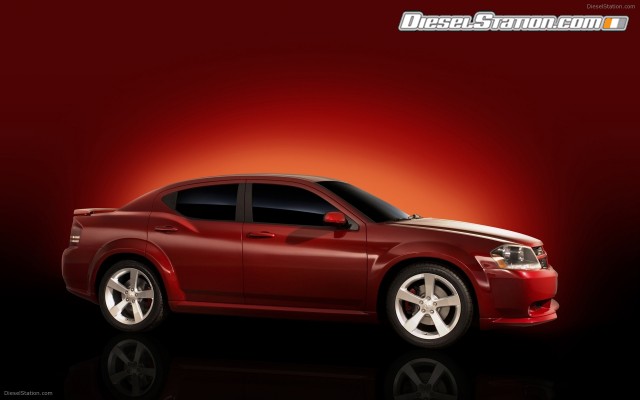 Red EDAG Light Cars Concept
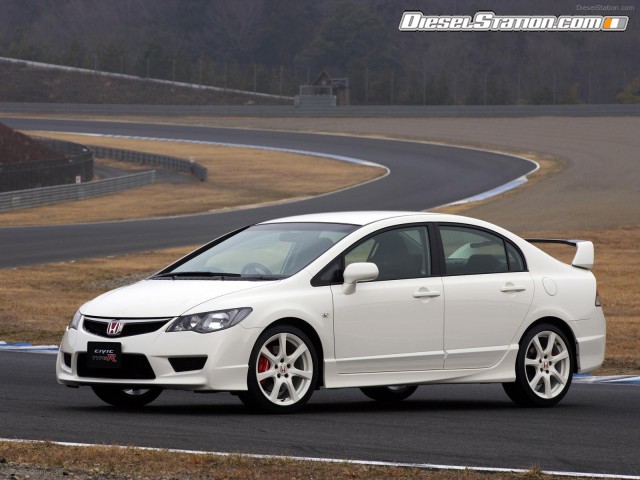 White EDAG Light Cars Concept
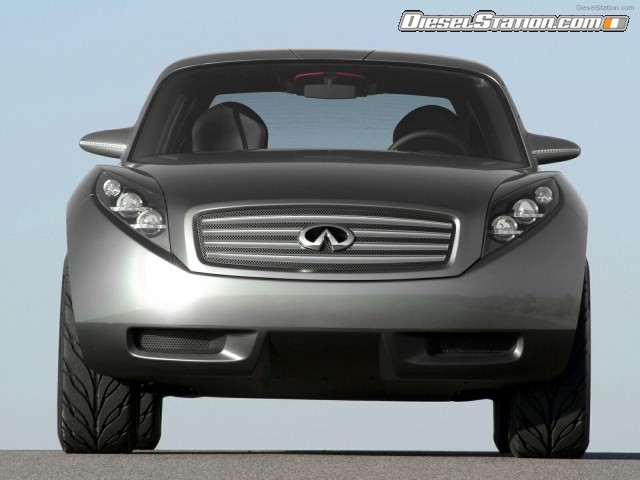 Silver EDAG Light Cars Concept
|
|---|
|
|---|
From Behind EDAG Light Cars ConceptRed EDAG Light Cars ConceptWhite EDAG Light Cars ConceptSilver EDAG Light Cars Concept




- Contest calls for ideas for “living better through technology”
- Winner receives $15,000 to help fund their idea and a tech-lovers’
adventure
- Social media program to support the Audi Iron Man 2 integration
HERNDON, Va., Apr 27, 2010 - In celebration of the April 26 world
premiere of Paramount Pictures and Marvel Entertainment’s Iron Man 2 in Los
Angeles, Audi of America, Inc., announced that it is launching a social
media competition called “Stark Expo & Audi Present: The Tony Stark
Innovation Challenge” in support of its prominent presence in the film,
which releases on May 7. Beginning April 28, consumers can submit up to
two-minute videos that showcase their ideas for better living through the
use of technology, just as Tony Stark did with the Stark Expo. Participants
then must rally members of their Facebook, Twitter, MySpace and other social
media networks to rate, comment, and discuss their ideas. Full contest
information and rules are available at www.TonyStarkInnovationChallenge.com.
“Achieving progress through technology is the message behind Iron Man 2,
and this idea is fundamental to Audi,” said Scott Keogh, Chief Marketing
Officer, Audi of America. “The partnership in Iron Man 2 celebrates our
shared focus on innovation, and this contest allows anyone with a great idea
to not just express it, but potentially make a true difference within their
industry.”
“The Tony Stark Innovation Challenge” mirrors Tony Stark’s desire to take
Stark Industries in a new direction, using his vast intellect and resources
to eradicate problems through technology. Submissions will be judged by Audi
on their ability to:
• Make the world a better place by solving a problem or improving an
existing solution
• Articulate and demonstrate expertise of the “better living through
technology” philosophy
• Have a scalability and adaptability to potentially change the way we live
• Showcase innovation, adventures, and intelligence worthy of Audi and Tony
Stark
• Appeal to the general audience as viewer ratings will help determine top
entries
The winner will receive:
• $15,000 in funding to develop their concept
• Their experience documented and featured on www.audiusa.com
• A four-day trip for two to California including air transportation, hotel
and meals
• Transportation in the latest innovation from Audi, the 2011 A8
• Spa treatments, tailored cocktail attire, and grooming to perfect their
Stark style
• A tour of Audi Design Center in Santa Monica
• A VIP day with the ICON Aircraft team, joining them in flight and water
testing of the innovative ICON A5 aircraft (one of Tony Stark’s toys)
• A day at the Audi Sports Car Experience to drive Tony Stark’s favorite
car, the Audi R8 on a racetrack
Audi will also be lending its support to the film through activities
including a month-long late night TV and national cable campaign and an
online presence on Fandango.com and Movies.com. The brand is also unveilng
an all-new Audi Iron Man ad that will run in cinemas in the month leading up
to the film release. Additionally, Audi is sponsoring the re-launch of
Marvel.com that will include a digital comic book featuring the R8 Spyder.
Tony Stark will be seen throughout Iron Man 2 in his Audi R8 Spyder, the
new soft top convertible version of the R8 super car which was featured in
the first Iron Man. In addition to the R8 Spyder, the A8 sedan will also be
showcased in the film.
The video submission period starts April 28, 2010 and ends June 9, 2010.
The voting period starts April 28, 2010 and ends June 13, 2010. Approved
submissions will be posted to the site within 48 hours. Users can rate video
submissions once per day, for the length of the contest participation period
on a scale from one to five. Final ratings will be calculated toward the
final score of each entry and will help determine the grand prize winner.
Finalists will be selected shortly after the submissions end. Clearance,
notifications and interviews will take place between June 17, 2010 and June
25, 1010, and the winner will be announced the week of June 28, 2010. Prizes
will be redeemed in August 2010. Submissions are only accepted in English
and from residents of the 50 U.S. and D.C. who are 18 and over and who
possess a valid driver’s license.


Lotus Engineering has conducted a study to develop a commercially viable
mass reduction strategy for mainstream passenger vehicles. This study,
released by the International Council on Clean Transportation, focused on
the use of lightweight materials and efficient design and demonstrated
substantial mass savings. When compared with a benchmark Toyota Venza
crossover utility vehicle, a 38% reduction in vehicle mass, excluding
powertrain, can be achieved for only a 3% increase in component costs using
engineering techniques and technologies viable for mainstream production
programmes by 2020. The 2020 vehicle architecture utilises a mix of stronger
and lighter weight materials, a high degree of component integration and
advanced joining and assembly methodologies.
Based on U.S. Department of Energy estimates, a total vehicle mass
reduction of 33% including powertrain, as demonstrated on the 2020 passenger
car model, results in a 23% reduction in fuel consumption. This study
highlights how automotive manufacturers can adopt the Lotus philosophy of
performance through light weight.
Dr Robert Hentschel, Director of Lotus Engineering said: "Lighter
vehicles are cleaner and more efficient. That philosophy has always been
core to Lotus' approach to vehicle engineering and is now more relevant than
ever. Lightweight Architectures and Efficient Performance are just two of
our core competencies and we are delighted to have completed this study with
input from the National Highway Traffic Safety Administration and the U.S.
Environmental Protection Agency to provide direction for future CO2
reductions. We believe that this approach will be commonplace in the
industry for the future design of vehicles."
The study investigated scenarios for two distinct vehicle architectures
appropriate for production in 2017 and 2020. The near-term scenario is based
on applying industry leading mass reducing technologies, improved materials
and component integration and would be assembled using existing facilities.
The mass reduction for this nearer term vehicle, excluding powertrain, is
21% with an estimated cost saving of 2%.
A benchmark Toyota Venza was disassembled, analysed and weighed to
develop a bill of materials and understand component masses. In developing
the two low mass concepts, Lotus Engineering employed a total vehicle mass
reduction strategy utilising efficient design, component integration,
materials selection, manufacturing and assembly. All key interior and
exterior dimensions and volumes were retained for both models and the
vehicles were packaged to accommodate key safety and structural dimensional
and quality targets. The new vehicles retain the vision, sight line, comfort
and occupant package of the benchmarked Toyota Venza.
Darren Somerset, Chief Executive Officer of Lotus Engineering
Incorporated, Lotus' North American engineering division which led the
study, said "A highly efficient total vehicle system level architecture was
achieved by developing well integrated sub-systems and components,
innovative use of materials and process and the application of advanced
analytical techniques. Lotus Engineering is at the forefront of the
automotive industry's drive for the reduction in CO2 and other greenhouse
gas emissions and this study showcases Lotus Engineering's expertise and
outlines a clear roadmap to cost effective mass efficient vehicle
technologies."
Mass and Cost Summary
Base excluding powertrain |
| ||||
|
(kg) | 2020 | 2017 | ||
% | % | % | % | ||
Body | 383 | 42% | 135% | 15% | 98% |
Closures/Fenders | 143 | 41% | 76% | 25% | 102% |
Bumpers | 18.0 | 11% | 103% | 11% | 103% |
Thermal | 9.25 | 0% | 100% | 0% | 100% |
Electrical | 23.6 | 36% | 96% | 29% | 95% |
Interior | 252 | 39% | 96% | 27% | 97% |
Lighting | 9.90 | 0% | 100% | 0% | 100% |
Suspension/Chassis | 379 | 43% | 95% | 26% | 100% |
Glazing | 43.7 | 0% | 100% | 0% | 100% |
Misc. | 30.1 | 24% | 99% | 24% | 99% |
Totals | 1290 | 38% | 103% | 21% | 98% |
The full report, entitled ‘An Assessment of Mass Reduction Opportunities for
a 2017 - 2020 Model Year Vehicle Program' can be found at the following
link:
http://www.theicct.org/documents/0000/1430/Mass_reduction_final_2010.pdf
ENDS
The 2020 Passenger Car Technical Detail
Body
The body includes the floor and underbody, dash panel assembly, front
structure, body sides and roof assembly. The baseline Toyota Venza
body-in-white contained over 400 parts and the revised 2020 model reduced
that part count to 211. The body-in-white materials used in the baseline
Venza were 100% steel, while the 2020 model used 37% aluminium, 30%
magnesium, 21% composites and 7% high strength steel. This reduces the
structure mass by 42% from 382 kg to 221 kg.
The low mass 2020 body-in-white would be constructed using a low energy
joining process proven on high speed trains; this process is already used on
some low volume automotive applications. This low energy, low heat friction
stir welding process would be used in combination with adhesive bonding, a
technique already proven on Lotus production sports cars. In this instance,
the robotically controlled welding and adhesive bonding process would be
combined with programmable robotic fixturing, a versatile process which can
be used to construct small and large vehicles using the same equipment.
Closures/Fenders
The closures include all hinged exterior elements, for example, the front
and rear doors and the rear liftgate. One alternative approach included
fixing the primary boot section to improve the structure, reduce masses and
limit exposure to high voltage systems. A lightweight access door was
provided for checking and replacing fluids.
The closures on the baseline Toyota Venza were made up of 100% steel. The
low mass Venza closures/fenders would be made up of 33% magnesium, 21%
plastic, 18% steel, 6% aluminium with the other 22% consisting of multiple
materials. The mass savings are 41%, a reduction from 143 kg to 84 kg.
Interior
The interior systems consist of the instrument panel, seats, soft and
hard trim, carpeting, climate control hardware, audio, navigation and
communication electronics, vehicle control elements and restraint systems.
There is a high level of component integration and electronic interfaces
replace mechanical controls on the low mass model. For the 2020 model the
instrument panel is eliminated replaced by driver and passenger side modules
containing all key functional and safety hardware. A low mass trim panel
made from a high quality aerated plastic closes out the two modules. The air
conditioning module is incorporated into the console eliminating the need
for close out trim panels; heated and cooled cupholders are integrated into
the HVA/C module. The audio/HVA/C/Navigation touch screen contains the
shifter and parking brake functions and interfaces with small electric
solenoids. This eliminates conventional steel parking brake and shifter
controls and cables as well as freeing up interior space.
The front seats mount to the structural sill and tunnel structure
eliminating conventional seat mounting brackets (10 kg) and the need to
locally reinforce the floorpan. The composite front seat structure utilises
proven foam technology; the seat mass is reduced by up to 50%. The rear seat
support structure is moulded into the composite floorpan eliminating the
need for a separate steel support structure. The front and rear seats use a
knit to shape fabric that eliminates material scrap and offers customers the
opportunity to order their favourite patterns for their new vehicle. Four
removable carpet modules replace the traditional full floor carpeting; this
reduces mass and allows cost effective upgrading of the carpet quality. The
floorpan is grained in all visible areas. The 2017 production interior mass
was reduced from 250 kg to 182 kg with projected cost savings of 3%. The
2020 production interior mass was 153 kg with projected cost savings of 4%.
Chassis/Suspension
The chassis and suspension system was composed of suspension support
cradles, control links, springs, shock absorbers, bushings, stabilizer bars
and links, steering knuckles, brakes, steering gearbox, bearings, hydraulic
systems, wheels, tires, jack and steering column.
The chassis and suspension components were downsized based on the revised
vehicle curb weight, maintaining the baseline carrying capacity and
incorporating the mass of the hybrid drive system.
The total vehicle curb weight reduction for the 2020 vehicle was 38%,
excluding the powertrain. Based on the gross vehicle weight, which includes
retaining the baseline cargo capacity of 549 kg and utilising a hybrid
powertrain, the chassis and the suspension components were reduced in mass
by 43%, with projected cost savings of 5%.
Front and Rear Bumpers
The materials used on the front and rear bumpers were very similar to the
existing model to maintain the current level of performance. One change was
to replace the front steel beam with an aluminium beam which reduced mass by
11%. The use of a magnesium beam was analysed but at the current time
exceeded the allowable price factor.
Heating, Ventilation and Air Conditioning
The air conditioning system was integrated into a passenger compartment
system and an engine compartment system. This section addressed the under
hood components which included the compressor, condenser and related
plumbing. The under hood components were investigated for technologies and
mass.
The study showed a relatively small mass difference for the underhood air
conditioning components based on both vehicle mass and interior volume.
Because of the highly evolved nature of these components, the requirements
for equivalent air conditioning performance and the lack of a clear
consensus for a future automotive refrigerant, the mass and cost of the
Toyota Venza compressor, condenser and associated plumbing were left
unchanged for both the 2017 and 2020 models.
Glazing
The glazing of the baseline vehicle was classified into two groups: fixed
and moving. The fixed glass is bonded into position using industry standard
adhesives and was classified into two sub groups: wiped and non wiped.
Factors involved in making decisions about glazing materials include the
level of abrasion it is likely to see during the vehicle life, the
legislative requirements for light transmissibility, the legislative
requirements for passenger retention and the contribution it will make to
interior noise abatement.
The specific gravity of glass is 2.6 and the thickness of a windshield is
usually between 4.5 mm and 5 mm, therefore the mass per square metre of 5 mm
glass is approximately 13 kgs. The high mass of glass provides a strong
incentive to reduce the glazed area of the body, reduce the thickness of the
glass and find a suitable substitute that is lighter. Fixed glass on the
side of the vehicle offers the best opportunity for mass reduction.
The mass of the baseline glazing was retained for both the 2017 and 2020
models; this was a conservative approach. It is possible that coated
polycarbonate materials may become mainstream in the 2017 - 2020 timeframe
for fixed applications.
Electrical/Lighting
The estimated mass savings for using thinwall cladding and copper clad
aluminium wiring, as used on the 2017 model was 36% versus the baseline
model. The lighting technologies section reviewed included diodes, xenon and
halogen. The study also reviewed a variety of wireless technologies under
development for non-transportation applications that could be used in this
time period pending successful development for mobile applications.
|
|---|


